









WooCommerce vs Shopify: What eCommerce Platform is Better for You
The world of eCommerce has drastically changed from the days when all you needed was to set up an online shop. Scalability, omnichannel experience, SEO, integrations, automations, analytics, custom UI/UX – these are some of the things that modern businesses require from their eCommerce platform.
And yet, out of the countless options for eCommerce platforms currently available, WooCommerce and Shopify remain the two most popular ones on the market.
But the question of which of these platforms is better goes way further than a superficial “better or worse” comparison. What really matters here is:
Which one will be a better fit for your business goals, needs, and long-term prospects?
Working as an eCommerce development agency with multiple modern technologies like WooCommerce, Shopify, Laravel, Next.js, Node.js, etc., we help our clients make the right choice based on their future growth needs and business goals rather than their current convenience.
In this blog, we’ll compare WooCommerce and Shopify from various angles – their capabilities, pros and cons, limitations and what kind of technology stack works best for certain business scenarios.
Understanding the Main Difference
At the highest abstraction layer, WooCommerce and Shopify represent two totally different philosophies behind their products.
WooCommerce: Freedom and Flexibility
WooCommerce is an open-source eCommerce framework for WordPress.
It gives businesses full control over their stores, customizations, codebase, hosting and infrastructure.
WooCommerce lets you:
- Manage hosting and infrastructure on your own;
- Implement any level of customization;
- Automate complex workflows using hooks;
- Build unlimited add-ons;
- Integrate with any external system;
Such flexibility makes WooCommerce an excellent solution for businesses with unique needs such as:
Shopify: Convenience and Speed
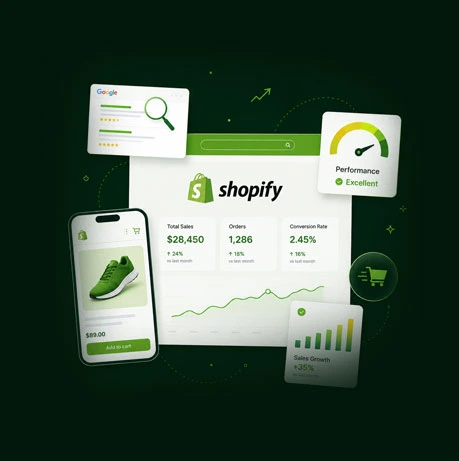
Contrary to that, Shopify is a fully managed Software-as-a-Service (SaaS) solution, which allows businesses to start selling online instantly and without any hosting or maintenance hassle.
Shopify:
- manages hosting,
- deals with security updates and maintenance,
- scales as you grow;
Therefore, Shopify is the perfect choice for:
- startups,
- convenience-focused businesses,
- direct-to-consumer brands (D2C);
The Real Business Angle: It’s About Much More Than Features
All comparison articles out there tend to limit themselves to comparing the features:
- product management,
- payment processing,
- theme selection,
- add-on capabilities,
- pricing and licensing terms.
However, today businesses should consider multiple other aspects as well:
- scalability and ability to scale,
- SEO performance and optimization,
- omnichannel capability,
- custom integration,
- mobile-first development;
And all those things make WooCommerce or Shopify a better option for your business based on your needs.
What Can Businesses Do with WooCommerce
Since WooCommerce is flexible and customizable by nature, it’s the best choice whenever businesses require more freedom and flexibility.
Being open-source software, WooCommerce allows developers to change virtually anything:
- checkout flow,
- product structure,
- database logic,
- cart behavior,
- APIs and integrations,
- UI and UX design,
- search algorithms,
- subscription logic,
- marketplace features;

Reasons Why Businesses Choose WooCommerce
There are multiple reasons why a business may choose WooCommerce. Some of those reasons include:
1. Ownership
One of the main features of WooCommerce is complete control and ownership. When you use WooCommerce, you:
- control your codebase,
- own your data,
- can freely manage your infrastructure,
- are responsible for your hosting environment;
This is especially crucial for:
- enterprises,
- multi-vendor marketplaces,
- B2B commerce,
- membership platforms,
- any other types of commerce that require flexibility and control over your store.
2. Strong SEO
And all those things make WooCommerce or Shopify a better option for your business based on your needs.
As the WordPress core itself is one of the most SEO-friendly CMSes, WooCommerce inherits this capability allowing businesses to implement:
- advanced metadata customization,
- flexible URL structure,
- blogging capabilities,
- custom schema.org markup,
- use powerful SEO plugins.
For content-driven businesses, WooCommerce is simply unbeatable.
3. Custom Commerce Development
Given the technologies and tools available to modern developers today, WooCommerce is an excellent choice for businesses that require custom development and advanced workflows.
We, as an eCommerce development agency with strong experience working with technologies like PHP, Laravel, Next.js, Node.js, React, GraphQL and REST APIs, often find ourselves working with WooCommerce when businesses want:
- ERP integrations,
- CRM synchronization,
- custom checkout systems,
- AI-driven commerce,
- advanced search experience,
- headless commerce architecture;
WooCommerce easily integrates with other systems including:
- Laravel services,
- Next.js frontends,
- Node.js services and microservices,
- Mobile apps,
- Custom APIs,
- and more.
This opens endless opportunities for building custom commerce platforms for our clients.
Why Shopify is a Good Choice for Businesses
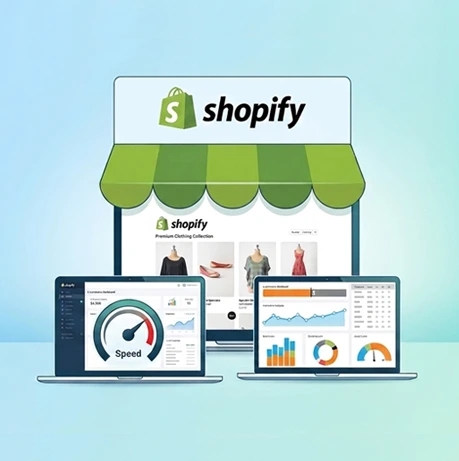
The main reason to use Shopify is the simplicity and convenience that this platform provides.
Unlike WooCommerce, Shopify frees businesses from infrastructure hassles:
- having to manage their servers,
- deal with security and regular updates,
- optimize their websites,
- etc.
Therefore, businesses get the chance to focus their efforts on:
- marketing,
- selling,
- product management.
Reasons Why Businesses Choose Shopify
Here are a few common reasons why businesses may choose Shopify:
1. Rapid Deployment
First of all, Shopify lets businesses deploy their websites extremely quickly compared to other alternatives.
This makes Shopify great for:
- building MVP websites,
- campaign stores,
- D2C product launches,
- or seasonal stores.
2. Performance and Reliability
Shopify is one of the fastest and most reliable eCommerce platforms out there.
Thanks to that, businesses can get benefits from:
- automatic scaling,
- PCI compliance,
- secure connections and SSL certificates,
- optimized content delivery via CDN;
This is especially beneficial during flash sales, promotions, launches or other events.
3. Ecosystem
Finally, due to its app ecosystem, Shopify lets businesses integrate multiple solutions for:
- email marketing,
- dropshipping,
- languages,
- loyalty programs,
- inventory management,
- analytics,
- shipping services,
- etc.
It’s especially convenient for SMBs lacking engineering departments.
The Technical Reality: Customization vs Convenience
From the perspective of technical implementation, the story gets slightly different.
WooCommerce emphasizes the following features:
- flexibility and custom architecture,
- complete ownership and customization.

Whereas Shopify prioritizes:
- convenience and speed,
- efficiency and simplicity.
None of those approaches is better by default.
The choice of which of them to pick depends solely on your business model and technological goals.
The Rise of Headless Commerce
Today, one of the greatest innovations in modern commerce architecture is the introduction of headless eCommerce.
With a headless approach, eCommerce is decoupled and split into:
- commerce engine,
- frontend experiences,
- APIs,
- CMS,
- mobile apps,
allowing businesses to take benefits of such innovations as:
- more performance,
- better customer experience,
- omnichannel delivery,
- progressive web apps,
- mobile first commerce;
WooCommerce with Next.js and Node.js
Depending on a certain business case, we use different headless architecture combinations with WooCommerce.
Backend:
- WooCommerce platform,
- Laravel APIs,
- Node.js backend systems.
Frontend:
- Next.js applications,
- React components,
- Tailwind CSS;
Infrastructures:
- AWS,
- Vercel,
- Docker,
- Cloudflare and other services.

Shopify with Hydrogen and React
Another way to build a headless store is to implement Shopify headless architecture that uses:
- storefront and GraphQL APIs of Shopify,
- new Shopify Hydrogen framework,
- react storefront;
It allows building:
- headless Shopify store,
- fast storefront performance,
- customized experiences.
Limitations of Using WooCommerce and Shopify
Any eCommerce platform has its limits and challenges.
The main limitations of WooCommerce include:
- necessity of hosting management,
- security and plugin updates,
- performance optimization,
which might result in:
- slow performance,
- plugin conflicts,
- security risks.
This is why working with a professional WooCommerce development team is essential.
Main Limitations of Using Shopify
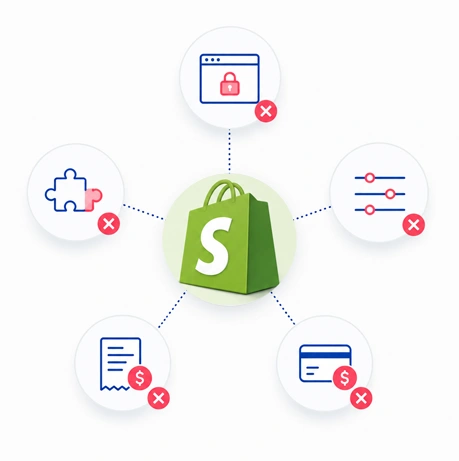
The main limitations of Shopify include:
- no access to the backend,
- high dependency on the platform,
- limitations regarding deep customization,
- applications fees,
- transaction costs;
Therefore, in terms of scaling and advanced workflows, businesses may face some limitations when using Shopify.
How to Choose the Right Platform for Your Business
The key thing here is to clearly identify what you prioritize when picking your next platform.
So you may choose WooCommerce if:
Your business:
- needs more customization,
- depends on SEO,
- requires custom workflow,
- plans integrations with ERP systems,
- needs more ownership,
- has a content-driven commerce strategy;
Optimal Technology Stack:
- WooCommerce,
- Next.js,
- GraphQL,
- AWS and other cloud infrastructure providers.
This combo will offer maximum flexibility.
Or choose Shopify if:
Your business:
- prioritizes quick deployment,
- enjoys managed infrastructure and speed,
- has limited technical resources,
- aims to grow as a direct-to-consumer brand (D2C),
- has limited needs in custom development;
Optimal Technology Stack:
- Shopify,
- Shopify Hydrogen,
- React,
- Shopify Storefront APIs.
Our Perspective As a Modern Commerce Development Agency
Being experienced in:
- WooCommerce development,
- Shopify development,
- Laravel Engineering,
- Next.js applications,
- Node.js backend development;
we’ve seen how important it is to pick the right solution based on:
- business goals,
- scaling needs,
- SEO strategy,
- operational capabilities,
- budget,
- customization needs,
- your long-term digital commerce strategy.
In many cases, we’ve noticed how:
- Shopify is awesome for fast market entry,
- WooCommerce is more suitable for long-term flexibility and customization.
And in the recent years, businesses tend to build their headless eCommerce platforms using:
- WooCommerce or Shopify commerce engines,
- Next.js as frontend;
- Node.js or Laravel as middleware services.
Final Thoughts
This combo will offer maximum flexibility.
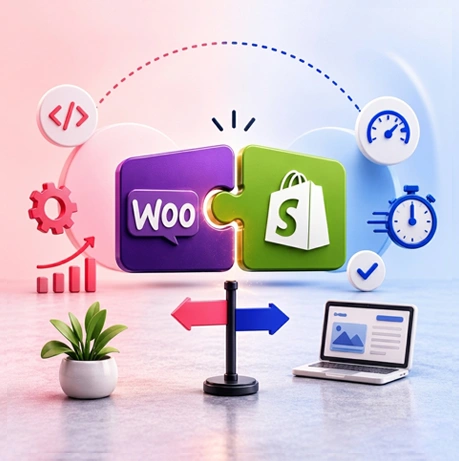
While one offers maximum flexibility, another one provides convenience and ease of use.
When it comes to choosing the right platform, here is how we recommend to act:
If your priorities are:
- maximum flexibility,
- SEO-friendliness,
- advanced customization,
- complex business logic,
then consider using WooCommerce.
If your priorities are:
- deploying your website faster,
- quick performance and convenience,
Then Shopify is your go-to platform.
But in the future, businesses will likely use hybrid and even headless architecture, leveraging multiple platforms and tools to achieve the desired results.
Let’s Find Your Perfect Platform
Compare WooCommerce and Shopify to determine the best eCommerce solution for growth, flexibility, performance, and long-term success.